For athletes
Marathon race photography: how 26.2 miles gets shot, and how to find your photos
A marathon is not one photo moment, it is a dozen of them spread over 26.2 miles and five or six hours. That is why the galleries are enormous and why finding yourself in them is so hard. Here is how it is shot, and the fastest way to your own photos.
On this page
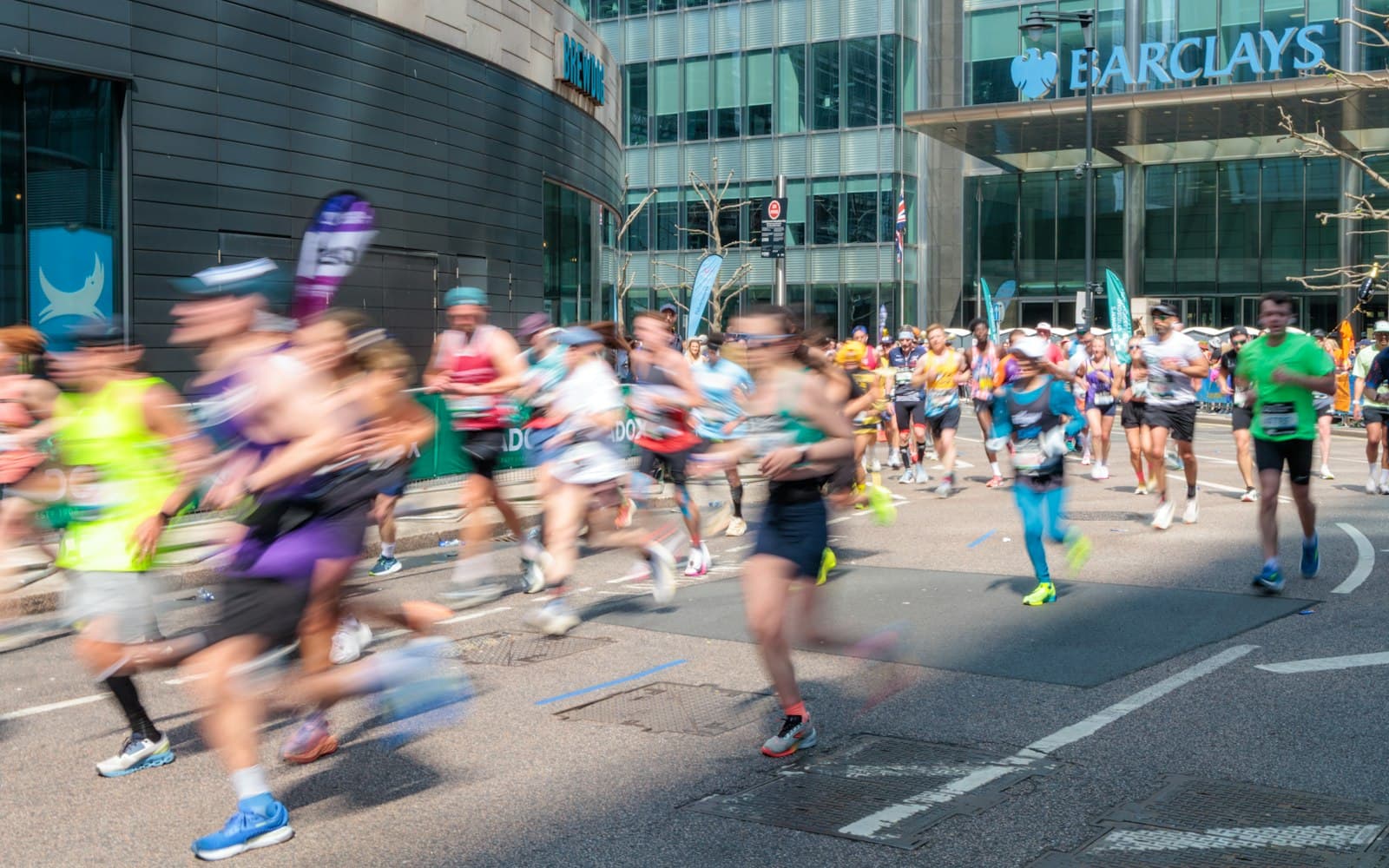
A marathon is the most heavily photographed race there is, and paradoxically one of the hardest to find yourself in. The reason is simple: it is not a single photo moment like a 5K finish, it is a dozen of them strung out over 26.2 miles and, for most runners, four to six hours. Understanding how the course is shot makes it much easier to find your eligible published matches afterwards.
How a marathon course gets photographed
Many camera points, not one
A well-covered marathon has photographers at the start, throughout the middle miles, and at the finish, with the richest coverage at the recognisable spots: a signature bridge, a downtown stretch thick with crowds, the turn into the finish, and often the brutal miles around 20 to 22 where the effort shows on every face. Big-city races may run a dozen or more fixed positions plus roaming shooters. Every one of those positions produces its own pile of frames.
The pack works against your bib
For the first half especially, you are running in a crowd. Your bib gets turned, pinned under a jacket you shed later, soaked and creased, or simply blocked by the shoulder of the runner next to you. Bib-based photo search depends on reading that number, so any frame where it is hidden is a frame you will never be shown.
The galleries are enormous
Multiply a dozen camera positions by thousands of runners passing each one over several hours and you get galleries that run to tens of thousands of images. Finding your handful by scrolling is the needle-in-a-haystack problem that makes most runners give up with a few mediocre shots.
The fastest way to find your marathon photos
Bib reading and manual scrolling are not the only possible search inputs. On PodiumBase, where event, account, consent, age, and jurisdiction gates allow it, selfie search can return likely matches from eligible published coverage. The selfie is deleted within 60 seconds, and the one-time search does not retain a derived face signature (details on our trust & safety page). The general bib-free approach is in how to find your race photos without a bib number.
Tips for better marathon photos
- Spot the camera and give it a beat. Photographers cluster at landmarks and the finish. A half-second of head up, shoulders back, and a real expression beats a hundred head-down frames.
- Run the tangents near photo points. The cleanest shots come when you are on the near edge of the course, not buried mid-pack on the far side.
- Keep your bib visible if you can, but do not rely on it. Where event, account, consent, age, and jurisdiction gates allow it, selfie search may return likely eligible matches when the bib is hidden.
- Save the celebration for the chute, not the line. The finish camera usually sits a few metres past the mat, so hold the arms-up a moment longer than feels natural.
The bottom line
A marathon can be shot across many points and tens of thousands of frames, while your bib may be hidden in some of them. Where event, account, consent, age, and jurisdiction gates allow it, selfie search can return likely eligible matches without relying only on a visible bib. Find my race photos to check your event.
Questions
Where are photographers positioned on a marathon course?
Usually at the start, the finish chute, and several points in between: iconic landmarks, bridges, the crowd-heavy miles, and often around mile 20 to 22 where the race gets hard. Big-city marathons may have a dozen or more camera positions plus roaming shooters.
Why is it so hard to find my photos from a marathon?
Volume. A large marathon produces tens of thousands of frames across every camera position, and your bib is often turned, sweat-soaked, or hidden behind other runners in the pack. Scrolling the full gallery by hand is slow and easy to give up on.
Can I find my photos if my bib was covered for most of the race?
Where event, account, consent, age, and jurisdiction gates allow selfie search, a clear view of your face can return likely eligible matches from covered camera points even when your bib was twisted, pinned under a jacket, or blocked by another runner.
How soon after a marathon are photos available?
Timing varies by event, photographer upload workflow, review, and release settings. Check the event page for eligible published coverage and current gallery status.
Ran a supported marathon? Check whether selfie search is available for your eligible account, consent, age, and jurisdiction.
Find my marathon photos