For athletes
Trail and ultra race photography: aid stations, forest light, and races that outlast the daylight
Trail and ultra photography is a different craft to road racing: remote courses, tricky light under the canopy, and races that can run from sunrise into the dark. Coverage is sparse by necessity, which makes finding your own photos even more of a hunt. Here is how it works.
On this page
Trail and ultra racing is one of the hardest disciplines to photograph, and the reasons have almost nothing to do with the photographer’s skill. The course itself fights the camera. If you have finished a trail race and come away with only a couple of distant shots, this is why, and here is how to find the rest.
Why trail and ultra coverage is sparse by nature
Photographers can only shoot where they can reach
A road marathon lets a photographer set up on any street corner. A mountain ultra does not. Shooters have to hike in with their gear to the points they can actually access: trailheads, aid stations, a summit or ridgeline, a river crossing, or a technical section near a road. The long, remote stretches between those points have no camera at all. That is not a gap in service, it is physics.
The light is difficult and always changing
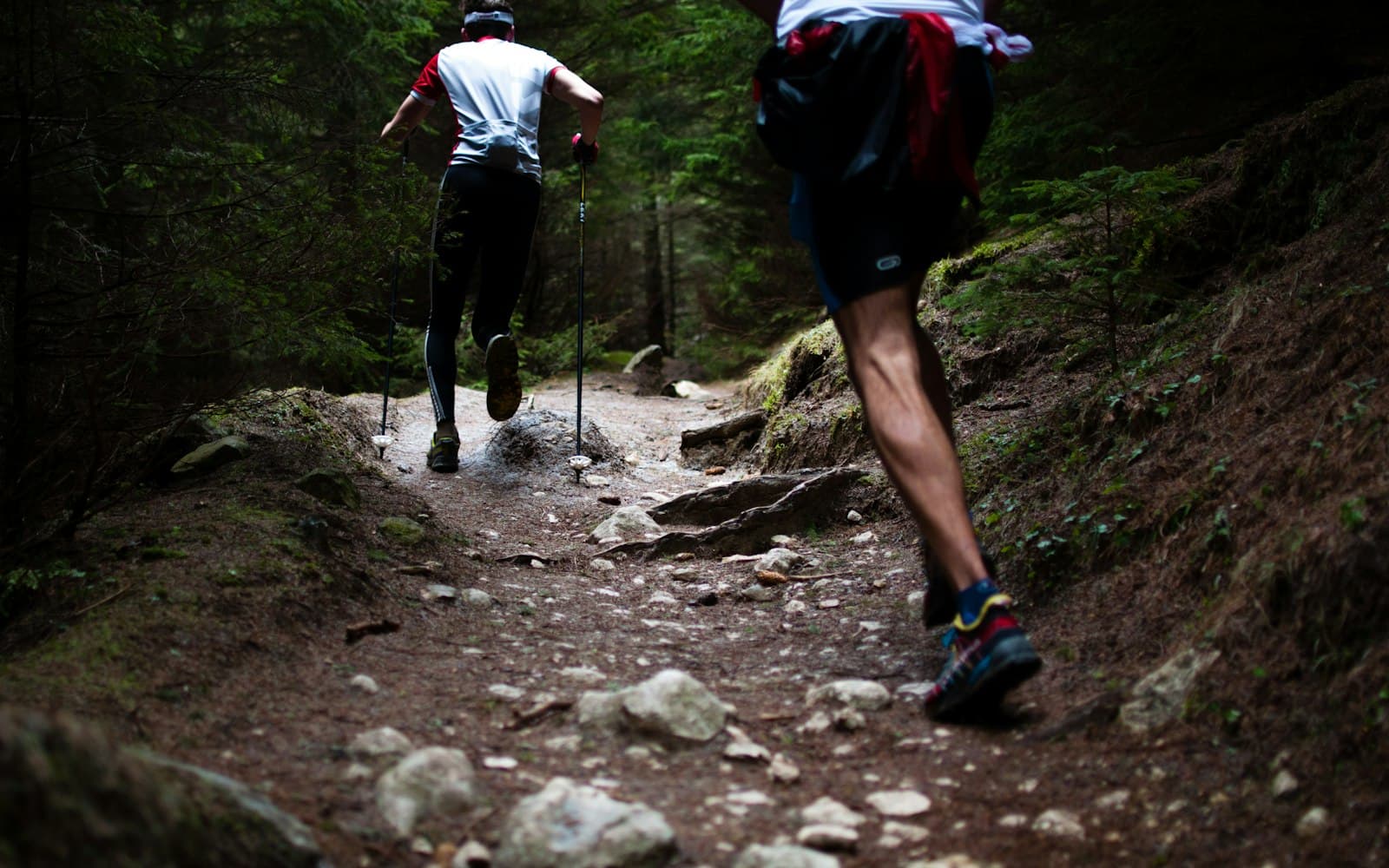
Under a forest canopy the light is dappled and uneven, bright patches next to deep shade, which is one of the trickiest situations there is to expose well. And an ultra can run from a pre-dawn start into the afternoon or all the way into the night, so the same photographer might shoot you in flat morning light and again by headlamp hours later.
Your bib is almost never visible
Trail and ultra runners wear hydration vests, wind shells, and layers that cover the bib for most or all of the race. Many pin it to a pack that faces backwards, or skip pinning it visibly at all. Bib-reading photo search has very little to work with here.
How to find your trail and ultra photos
Coverage is scattered across a handful of hard-won positions, and hidden bibs make manual browsing especially difficult, whether you were caught cresting a climb at mile 8 or grinding through an aid station at mile 62. On PodiumBase, where event, account, consent, age, and jurisdiction gates allow it, selfie search can return likely matches from eligible published coverage. The selfie is deleted within 60 seconds, and the one-time search does not retain a derived face signature (see our trust & safety page). If you prefer the general playbook, finding race photos without a bib number covers it.
Tips for better trail race photos
- Photographers live at the hard bits. Expect a camera at the big climb, the summit, the technical descent, and the aid stations. Lift your head there.
- Push your sunglasses up for a beat at a photo point if you can. Eyes make the shot, and they also help face matching lock on.
- Do not count on your bib. Under a vest and a jacket it may be invisible most of the day; where event, account, consent, age, and jurisdiction gates allow it, selfie search may return likely eligible matches that bib search misses.
- Expect fewer, more dramatic frames. Trail coverage trades quantity for scenery. The shots you do get are often the best of any discipline.
The bottom line
Trail and ultra races are shot at whatever points a photographer can physically reach, in hard light, sometimes into the dark, with your bib hidden the whole way. Matching on your face can help return eligible published matches from that scattered coverage. Find my race photos to check availability for your race.
Questions
Why are there so few photos from my trail race?
Access. Photographers can only shoot where they can physically get to and carry gear: trailheads, aid stations, a summit, or a technical section near a road. Long remote stretches simply have no camera, so coverage is naturally sparser than a road race.
My bib was under my pack or jacket the whole race. Can I still be found?
Where event, account, consent, age, and jurisdiction gates allow selfie search, a clear view of your face can return likely eligible matches even when a hydration pack, jacket, or layer hides your number.
The photos from later in my ultra are dark. Why?
Long ultras run from daylight into dusk and night. Photographers shoot at high ISO or with fill flash after dark, and canopy shade creates uneven, dappled light even in daytime. It is a genuinely hard lighting environment.
Coverage was scattered across different spots. How do I find all of my shots?
Where the event, account, consent, age, and jurisdiction gates allow it, selfie search can return likely eligible matches from covered points, reducing the need to guess which aid station or climb caught you.
Raced a supported trail or ultra? Check whether selfie search is available for your eligible account, consent, age, and jurisdiction.
Find my trail photos